
Connecting Education: Association for Christian Theological Education in Africa
He had a dream: In 1975, Dr. Byang Kato wanted to connect and support African churches. His vision continued to be realized even after his death. His idea gave rise to the organization ACTEA (Association for Christian Theological Education in Africa). With high aspirations and great passion, ACTEA has been dedicated to this monumental task for five decades and is now embarking on a new and important chapter.
 © Foto: Akira Hojo/unsplash | ACTEA | The Association for Christian Theological Education in Africa (ACTEA) aims to connect African churches.
Africa is not ONE country. Africa is many countries. How many? The figures — and perspectives — vary. Currently, the United Nations recognizes 54 African states. Regional conditions, landscape, religion, culture, ethnic groups, and the official and tribal languages spoken — these 54 countries alone reveal significant differences among themselves. When it comes to languages, the colonial past also usually plays a major role. Many of the countries have retained the language once introduced by the colonial rulers as one of their official languages. As a result, depending on a country’s historical context, English, French, or Portuguese are spoken on the African continent alongside other languages.
As desirable as the diversity of the individual countries may be, it nevertheless hinders cooperation in areas where differences are not so great and where collaboration would be both meaningful and enriching — such as in Christian theological exchange. Dr. Byang Kato, the first African General Secretary of the Association of Evangelicals in Africa (AEA: Association of Evangelicals in Africa), when he dreamed of an organization that would connect theological institutions in Africa and support them in the areas where they needed help.
A Dream That Must Not Die
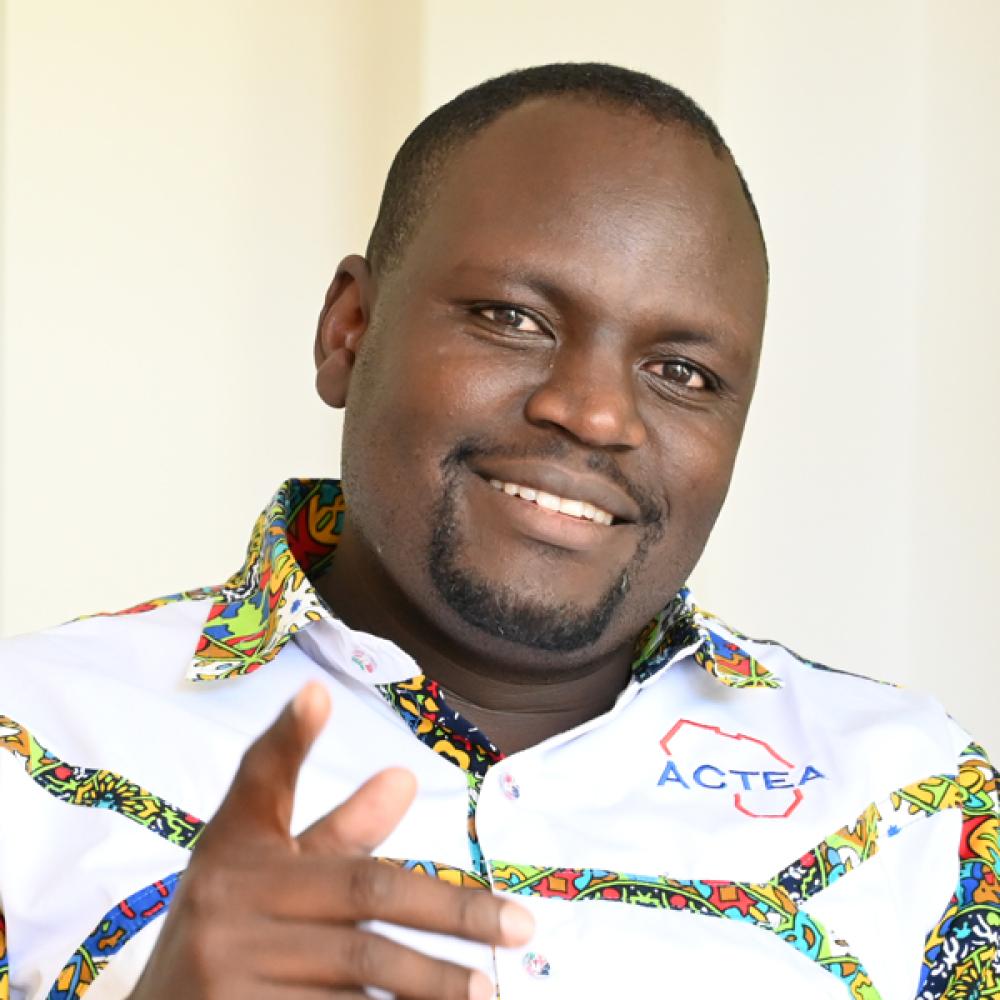 © Foto: Corinna Waltz/EMW | David Tarus is the Executive Director of the Association for Christian Theological Education in Africa (ACTEA).
His dream finally became a reality in 1976, although he himself was no longer alive to see it. Dr. Byang Kato died shortly after presenting his idea. “We at the AEA looked into what we could do to ensure that his idea would not die with him, and that’s how ACTEA came into being,” explains current Executive Director Pastor David Tarus, describing the situation at the time.
When ACTEA was founded in 1976 as a ministry of the Association of Evangelicals in Africa (AEA) with the support of the Theological and Christian Education Commission (TCEC), the acronym still stood for “Accrediting Council for Theological Education in Africa.” But over time, it became clear that this name fell far short of capturing the tasks ACTEA was increasingly taking on and the great responsibility that arose from them. And so today, ACTEA stands for “Association for Christian Theological Education in Africa.”
ACTEA’s mission is to serve theological institutions across the entire African continent in three ways: by promoting high-quality theological education through institutional reviews and academic accreditation; by providing institutional support services and capacity-building forums for leaders and faculty at theological institutions; and by facilitating networking and collaboration among theological institutions in Africa.
Specific Challenges in Francophone Africa
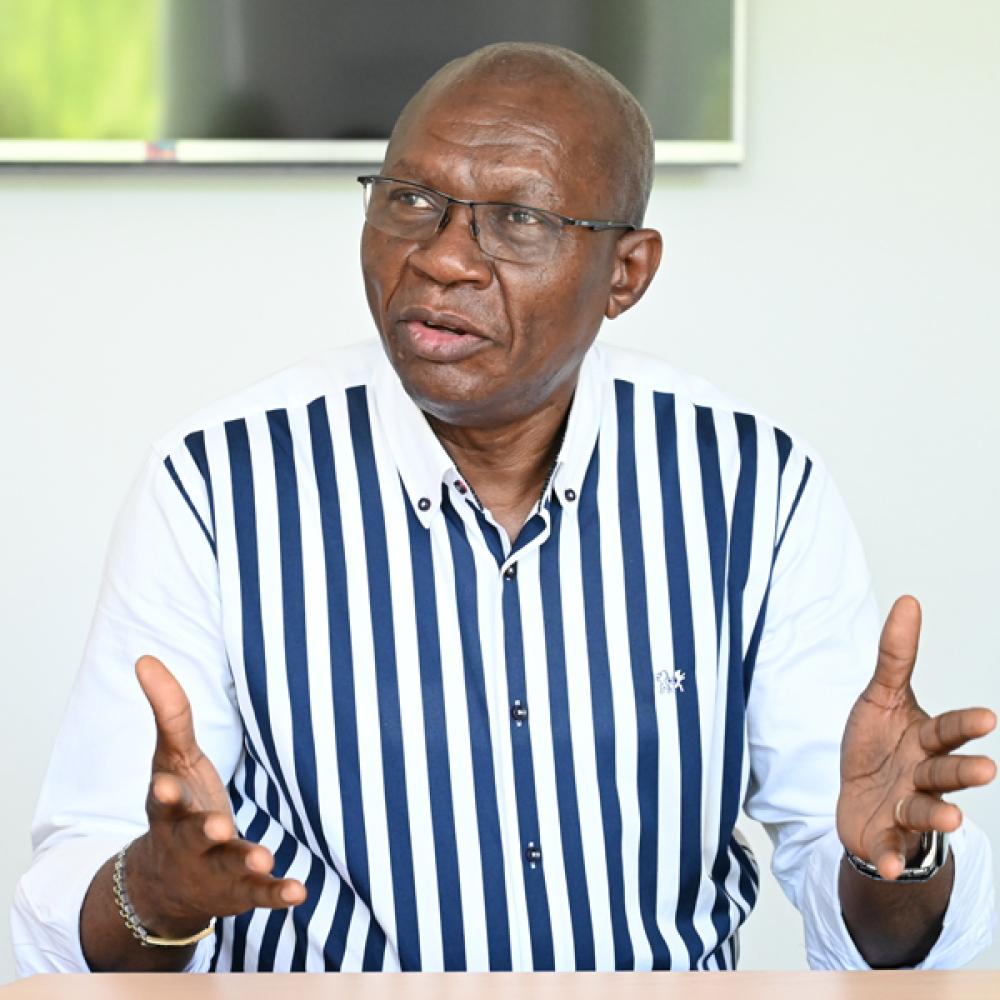 © Foto: Corinna Waltz/EMW | Prof. Dr. Eale Bosela
However, a critical look at its own regions of operation revealed that ACTEA has so far primarily reached English-speaking regions of Africa. Yet it is precisely the countries of Francophone Africa that face particular challenges, says Prof. Dr. Eale Bosela Ekakhol, former Director of Peace, Diaconal Ministry, and Development Programs at the All-African Conference of Churches (AACC) in Nairobi: “Due to the general situation in these countries, many cannot afford the high tuition fees. Those who do study find it much harder to conduct research, since there is far less theological material available in French than, for example, in English or German.” “In some countries, the situation for Christians is alarming,” adds David Tarus, “in Nigeria, for example, we lose a pastor almost every week due to kidnappings or killings.” There are regions in Africa where, due to a shortage of personnel, laypeople with little theological training are ministering to entire congregations, and pastors are responsible for vast parish territories. The two theologians therefore warmly welcome the opportunities created by the expansion of ACTEA’s sphere of influence to Francophone African countries, which is currently underway: “We need more well-trained pastors and spiritual leaders so that Africa can fulfill its increasingly important role in global Christianity.” Eale Bosela Ekakhol will play a key role in this expansion. He will establish and lead ACTEA’s new branch in the Democratic Republic of the Congo, which will have a Francophone focus.
For the two theologians, Bosela and Tarus, this new branch of ACTEA is more than a simple expansion into another language. Rather, it is a step toward making ACTEA’s vision (“Toward a vibrant African church that transforms society”) a reality. They hope that the Christian churches of Africa will become active, vibrant churches that develop the power to transform not only individual congregations but African society as a whole. “We know this is a grand vision, but we are convinced that ACTEA is contributing to it. Perhaps we will still witness the positive impact of our ministry in the various language regions of Africa in our lifetime — God willing.”
Association for Christian Theological Education in Africa (ACTEA)
The Association for Christian Theological Education in Africa (ACTEA) strengthens theological education in Africa. Founded in 1976, the organization supports theological colleges and seminaries through accreditation, research, networking, and capacity building. Its goal is to promote Protestant theological education, strengthen churches, and contribute to social development in Africa.
More about ACTEA: acteaweb.org